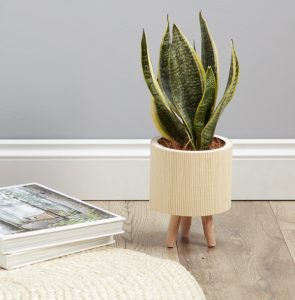
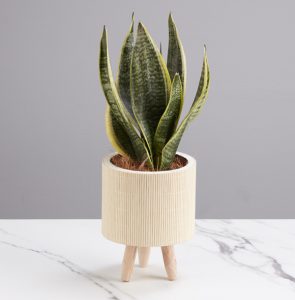
The architectural focus that snake plant adds is suitable for a wide variety of interior design styles, from rustic chic to contemporary sleek. These designs can all benefit from the addition of snake plant. The use of snake plant into any of these designs is likely to yield positive results. It is likely that successful outcomes will emerge from incorporating snake plant into any of these designs. Its colour consists of varied stripes of green and grey with yellow borders, and its tall, rigid leaves can grow to a height of up to three feet.
Its colour consists of alternating stripes of green and grey. Its colour consists of varying stripes of green and grey in a striped pattern. They have the potential to reach a height of one metre when fully mature. There is a considerable probability that you are better familiar with the snake plant under an other name, such as mother-in-tongue. This is because this term more accurately describes the plant’s appearance. This language also goes by the name “law’s mother-in-tongue,” which is another prevalent name for it.
How do snake plants like to be potted?
When growing snake plants, terra cotta pots are preferred over plastic pots because of their porous nature. This is because the soil that is contained inside of terra cotta pots has the potential to dry out more quickly than the soil that is contained inside of plastic pots. The most effective method for growing snake plants is to use terra cotta pots as their containers. This is due to the aforementioned factors, which were stated earlier. It is of the utmost importance that, as part of your purchase, you choose potting soil that has an acceptable level of drainage.
This is a requirement. It is recommended that “cacti and succulents” be planted on soil that has been developed expressly with the intention of supporting the growth of these particular kinds of plants. Plants that have a prickly or spiky appearance are what are referred to collectively as “cacti and succulents.” This particular form of potting mix is more resistant to becoming oversaturated with water when compared to other types of potting mix, which is the reason why this is the case.
Total price: £22.99
Do snake plants do well in pots?
Remove the plant from the container it is currently growing in and repot it into a new container that is one size larger than the one it was previously grown in. This will ensure that the plant continues to thrive in its new environment. The plant will be able to continue to flourish in its new surroundings as a result of this. For example, a plant that had been grown in a container that was only 8 inches in height should now be planted in a container that is 10 inches in height.
When the time comes to repot your snake plant, a potting mix that has been created with cacti in mind, such as the one that is depicted up there, is an excellent alternative for you to use as the medium for the repotting process. You can find an example of such a mix in the image that is located above. Such potting mixtures are available at most places that sell gardening supplies.
Do snake plants need deep pots?
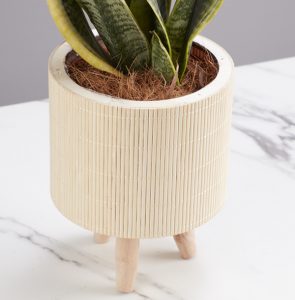
In the vast majority of cases, the expansion of their rhizomes occurs more frequently in a horizontal direction than in a vertical one. This is because their rhizomes are horizontally oriented. The expansion of a rhizome can occur in either the horizontal or vertical plane. If the container is excessively deep, there will be a bigger volume of soil, which may cause the roots to be kept unnecessarily moist for a significantly longer period of time than is necessary. Because there will be less dirt in the container if it is too shallow, this may not be able to take place.
If the container is excessively wide, then there is an additional chance that this will happen. This problem can be sidestepped if one makes certain that the depth setting on the container is maintained at the appropriate level at all times. If one makes sure that the “depth setting” on the container is maintained at the appropriate level at all times, then they won’t have to worry about having to deal with this problem.
There is a species of plant known as sansevieria, which thrives in dimly lit environments and may be found growing in their natural habitat in regions that are said to as tropical. Sansevieria like to grow in moist conditions. As a result of the fact that a snake plant is the only plant that can survive in cold temperatures in USDA zones 9 through 11, conditions that are characterised as temperate are the ones that are most favourable to the plant’s continued survival. This is because cold temperatures kill all other plants in these USDA zones. In some types of climate, the majority of the growing season for a snake plant can be spent successfully as an indoor plant. This is especially true during the winter months.
The plant will need to be transferred outside once the temperature begins to rise so that it can continue to expand. This method of plant cultivation is not applicable in any other zones because it is not possible to grow plants there. Consequently, this approach cannot be used in any other zones. To find the most suitable Snake plant just visit the Funkypigeon website.