Believe you can’t have a sweet treat even while you’re attempting to cut calories? You should reconsider! If you have a sweet craving, you’ll love their meal replacement snack bars. They give you the satisfying feeling of eating something sweet without the guilt! Although they are much healthier and may still aid in weight reduction, their diet bars resemble your favourite snack and chocolate bars in both appearance and flavour.
This is the ideal food since it is low in calories, carbohydrates, and fat, and it is rich in protein and contains more than twenty different vitamins and minerals. Everything is at the right place to help you lose weight quickly while sticking to a low-calorie diet.
Because of their low calorie content, you may assume that their bars are on the smaller side. You may use their bars as a complete meal substitute since they are bigger than competing brands. Because of this, plus the fact that they are rich in protein, they may help you resist those annoying cravings and feel full for longer between meals.
With so many options, including chocolate, fruit, and more, you’re likely to discover a flavour that suits your taste.
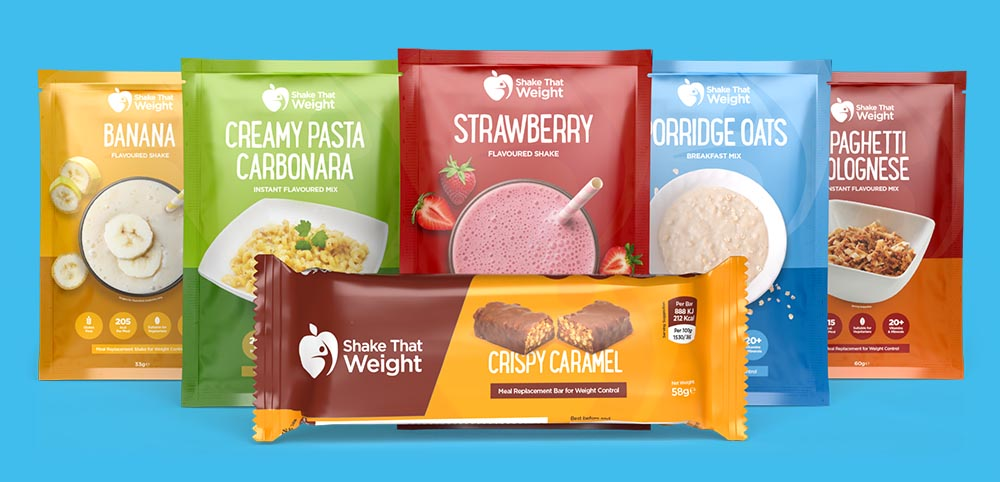
DELVING INTO THE SHAKE THAT WEIGHT’S BARS
A personal exercise tool, shake weight bars are intended to tone and build muscles by means of intense, repetitive shaking actions. Most shake weight bars are made to resemble dumbbells in that they weigh each end and need the user to shake the weight back and forth to target various muscle groups. The user developed greater muscular endurance, tone, and strength by the resistance that continuous movement produced. Most commercials touted shaking weight bars as a very easy and efficient way to intensify exercises without requiring a lot of room or particularly heavy equipment.
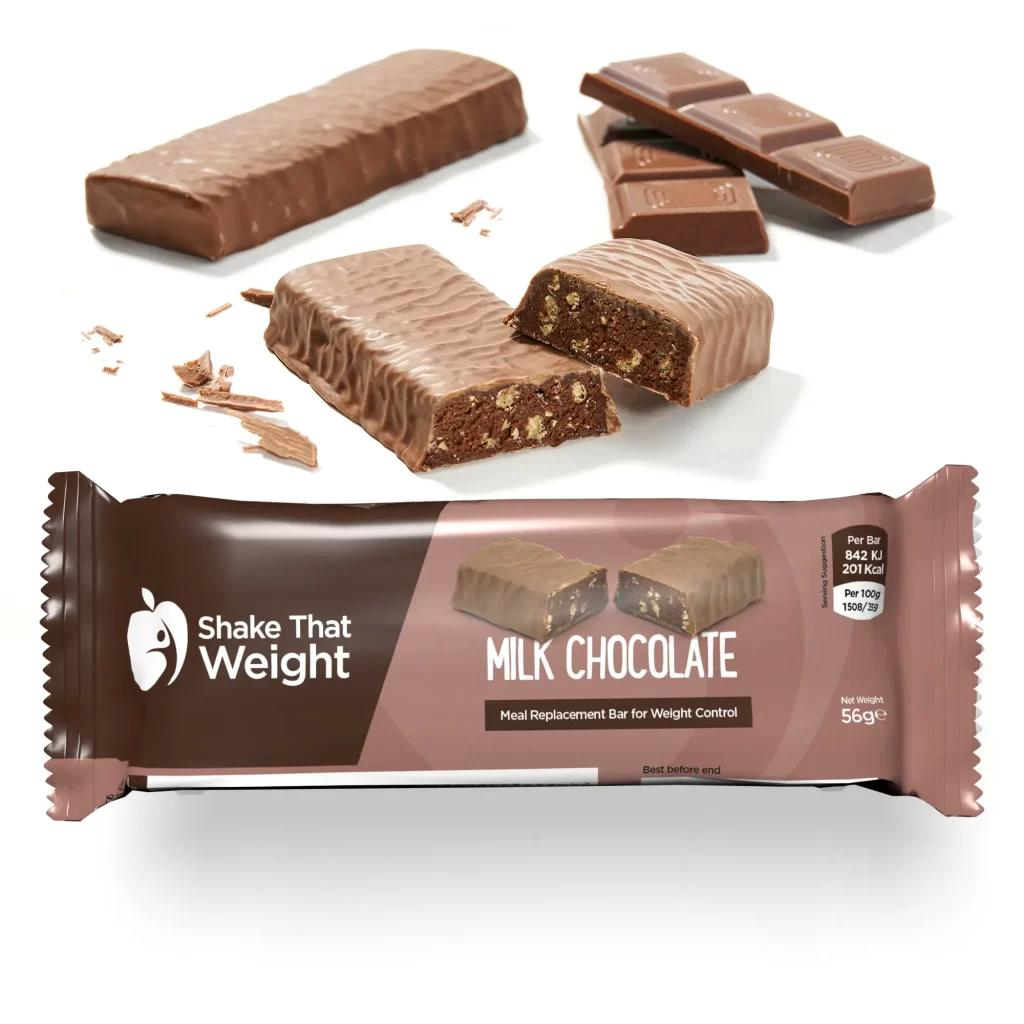
Milk Chocolate Meal Bar
Would you want to satisfy your sweet need while still cutting calories? Their Milk Chocolate Meal Replacement Bars make it possible to do both of those things, even if it seems unbelievable. You won’t feel bad about indulging in these bars at any meal of the day—breakfast, lunch, or dinner—because each serving has just 201 calories!
- Calories (201 per bar)
- Twenty-plus nutrients
- 12 grammes of fat in one bar
- Carbohydrates, 22.3 grammes per bar
- 14 grammes of protein in every bar
- Packed with beneficial fibre
- Great for those who choose a vegetarian diet
- No gluten.
- Exempt from palm oil
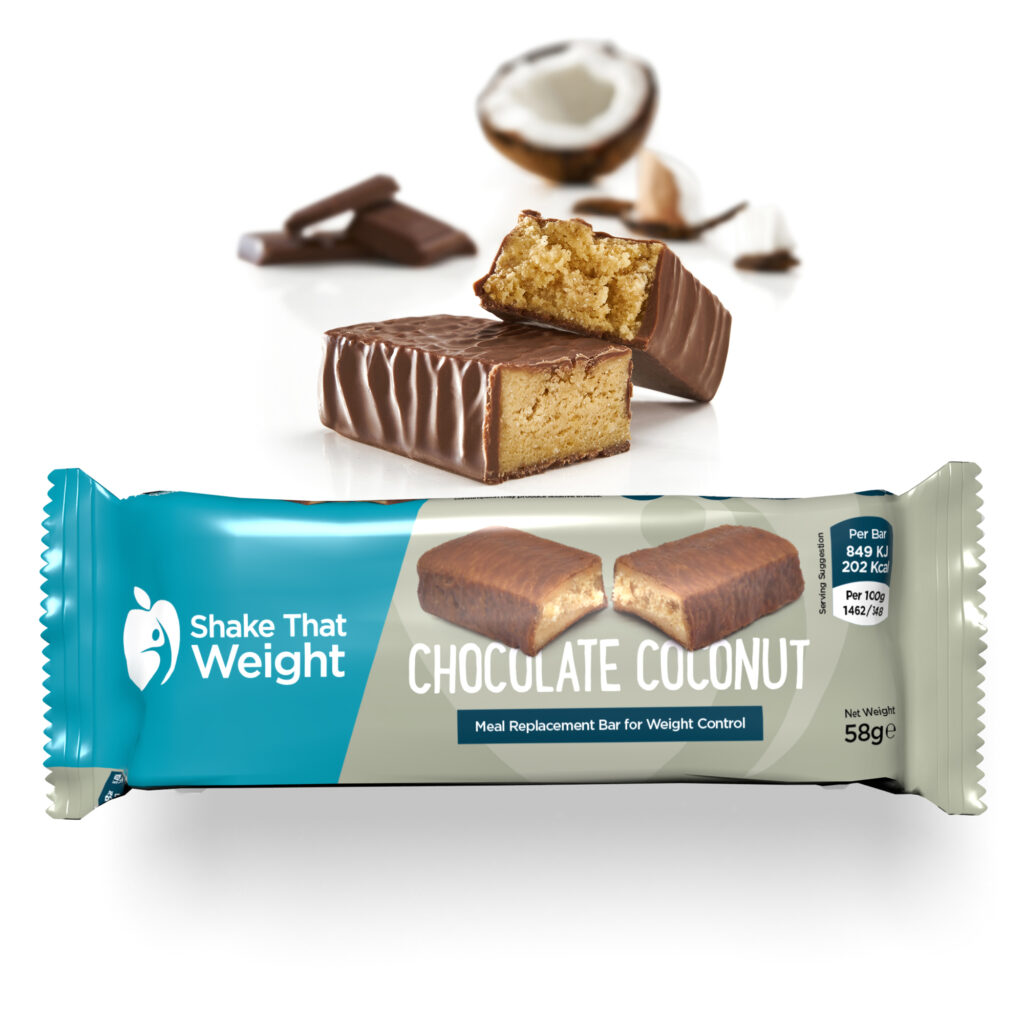
Chocolate Coconut Bar
Indulge in their decadent coconut bars to satisfy your sweet tooth and support your weight reduction journey. A chewy, coconut-flavored centre covered in silky milk chocolate; perfect for those following any of their diet regimens as a complete meal substitute.
- Meal equals one bar.
- With 13.9% protein in each bar
- Great for those who choose a vegetarian diet
- No gluten, little sugar
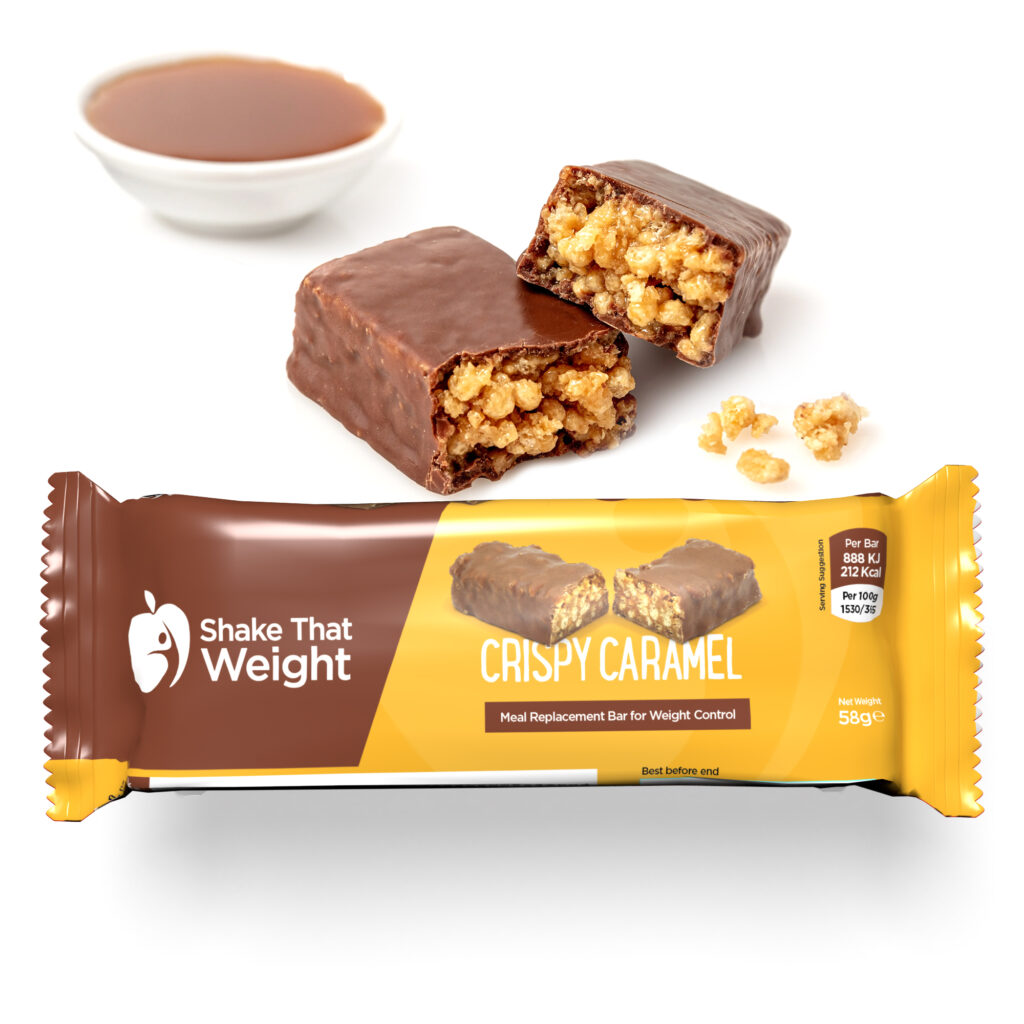
Crispy Caramel Meal Bar
These crunchy caramel nibbles encased in velvety milk chocolate make a great snack for anyone following any of their diet regimens. Perfect for those who can’t resist the sweets, their Crispy Caramel Meal Replacement Bars will make you forget you’re consuming a weight reduction product.
- This bar is equivalent to one meal.
- Twenty-plus nutrients
- 7 and a half grammes of fat per serving
- 24.75 grammes of carbohydrates
- 15.g of protein in only one meal
- Packed with beneficial fibre
- Great for those who choose a vegetarian diet
- No gluten.
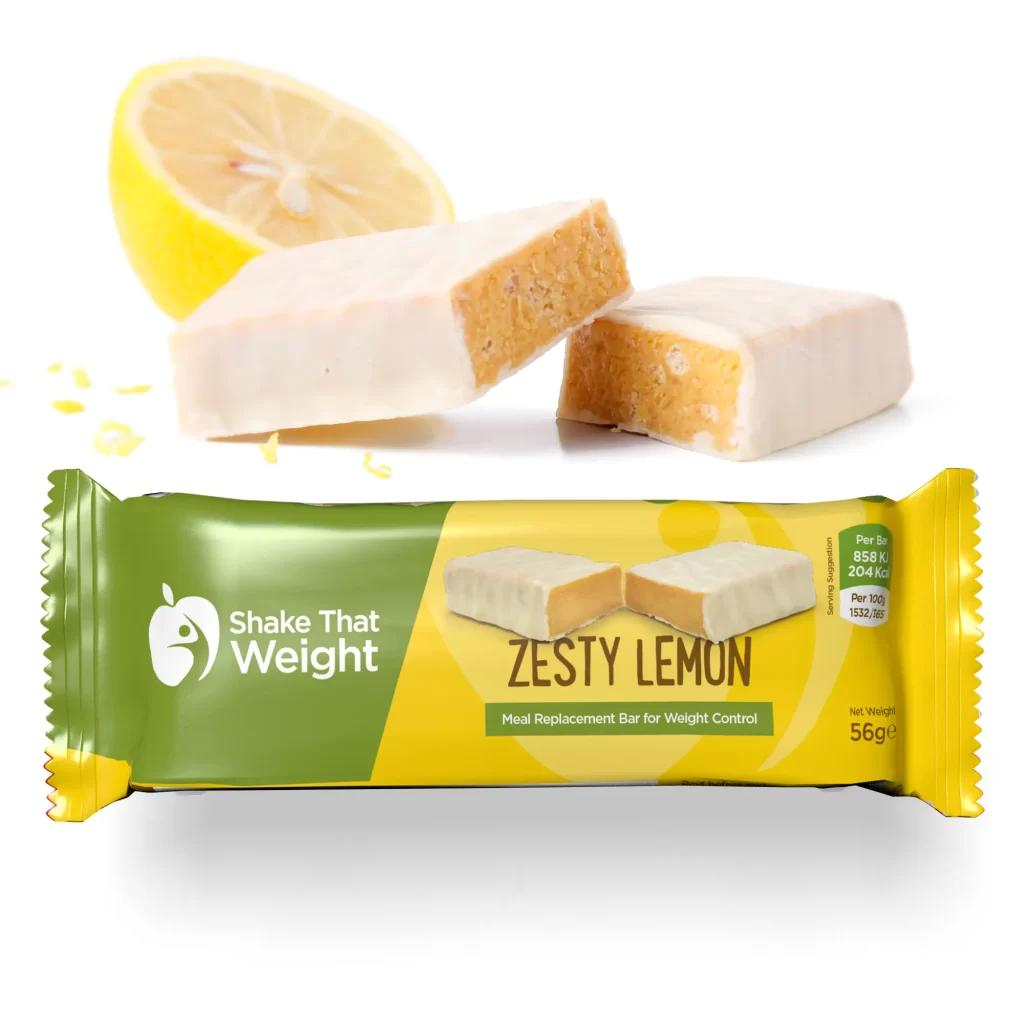
Lemon And White Choc Meal Bar
Would you want a dessert to accompany one of their diet plans? If you’re looking for a meal replacement, try their tasty Lemon and White Chocolate Bars. With just 204 calories per serving, you may indulge in what tastes like a true sweet treat without feeling guilty!
- 204 calories in one bar
- Twenty-plus nutrients
- Bar contains 14.0 g of protein.
- Delicious, filling, and gluten-free
- Suitable for those who do not use palm oil
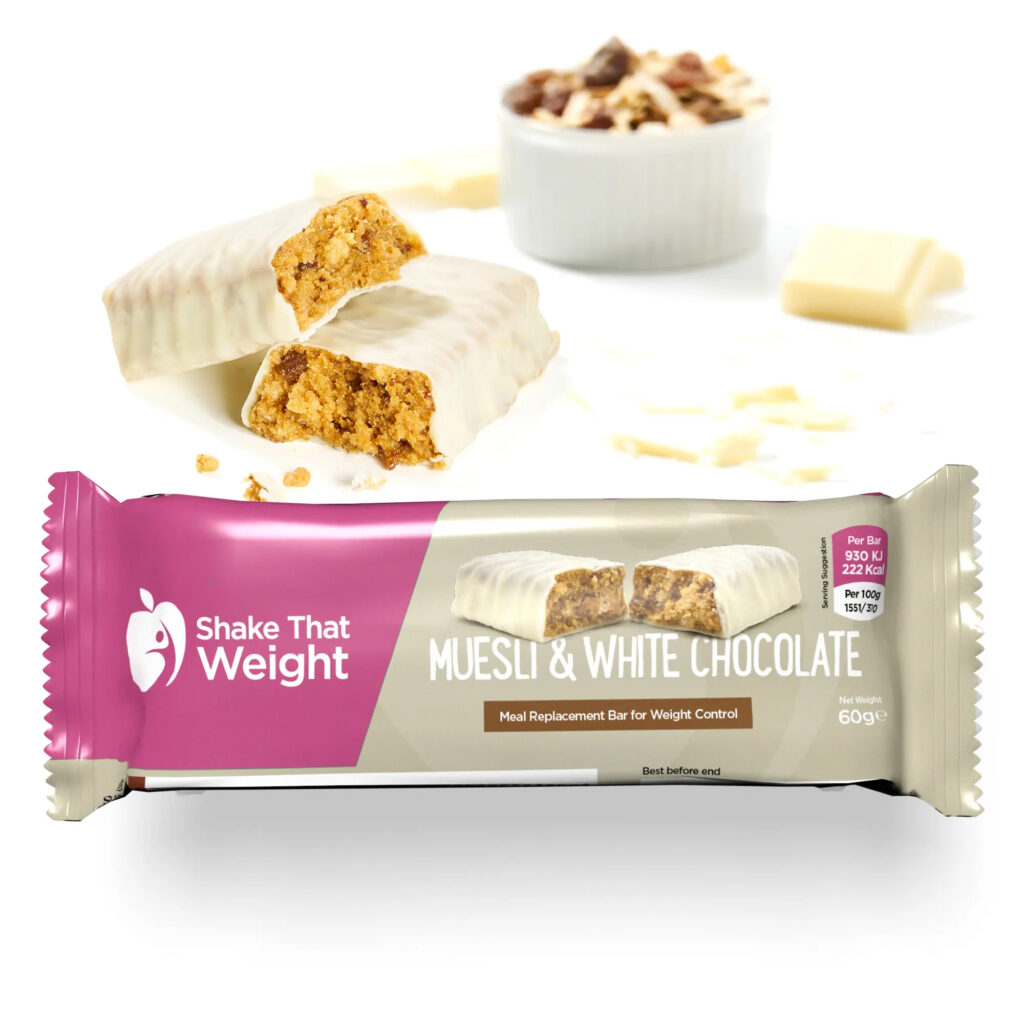
Muesli And White Choc Meal Bar
With just 222 calories per serving, these Muesli and White Chocolate Meal replacement Bars are the perfect guilt-free indulgence. The delicious golden muesli is covered in creamy white chocolate, making them seem like a decadent treat. In fact, their delicious flavour will fool you into thinking you’re eating a weight loss product. What’s more, each serving is individually wrapped for your convenience, so you may snack on them anytime, anywhere.
- Calories (222 per bar)
- Twenty-plus nutrients
- Bar contains 7.3% fat
- There are 25.2 grammes of carbohydrates in one bar.
- 15% protein in every bar
- Packed with beneficial fibre
- Great for those who choose a vegetarian diet
- No gluten.
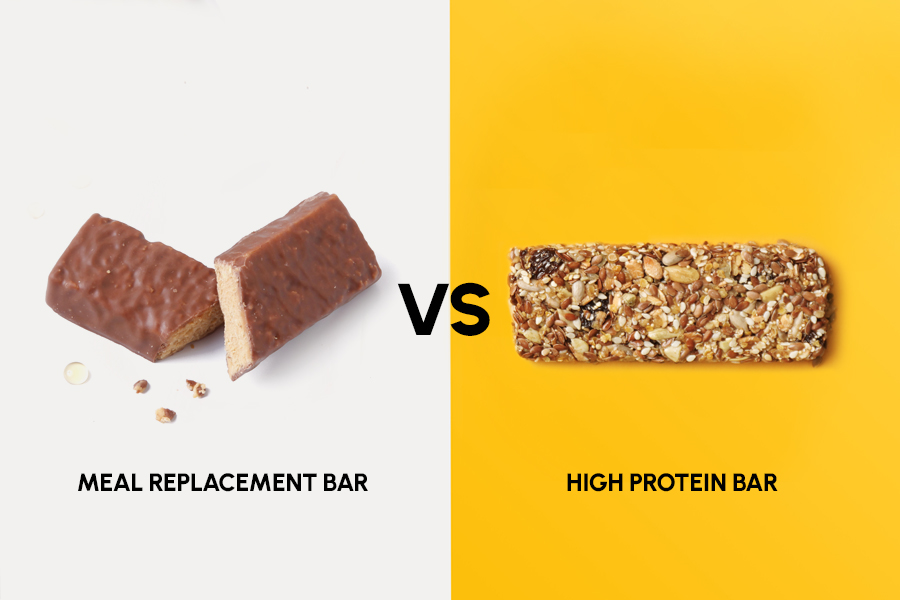
Comparison of protein bars vs meal replacement bars for weight loss;
Redefining Success in Weight Loss
You may be tempted to skip the meal replacement bar in favour of one of the many cereal, snack or protein bars that are now on offer. However, this may not be the smartest choice for your weight reduction efforts. Dietitian Juliette Kellow outlines the reasons behind it all…
Cereal, snacks, and protein bars are abundant in grocery stores, newsstands, fitness centres, and health and fitness websites. Substituting one of these for your regular meal replacement bar can be tempting, what with all the claims made about their protein content, fibre content, calorie count, and ingredients (healthy grains, nuts, fruit, etc.). After all, they have a more natural sound and are usually cheaper.
Meal replacement bars are much superior than cereal, snack, and protein bars, therefore it’s important to use them exclusively if you’re serious about becoming healthy on the Shake That Weight programme.
Names are the best places to start looking for clues. Meal replacement bars are a kind of food product that is designed to take the place of actual meals. From a legal standpoint, this implies that their calorie and nutritional content must adhere to certain standards.
- Have a fat content of no more than 30% and meet dietary requirements for linoleic acid, an important polyunsaturated fatty acid.
- Have a protein content of 25% to 50% of total calories and satisfy certain amino acid (protein building block) standards set forth by the World Health Organisation.
- Calcium, phosphorus, iron, magnesium, selenium, copper, selenium, vitamin A, vitamin B1, vitamin B2, vitamin B3,
- vitamin B5, vitamin B6, vitamin B7, vitamin B9, vitamin B12, vitamin C, vitamin D, and vitamin E
- Should all be provided at a minimum of 30% of the daily nutritional benchmarks known as Reference Intakes or
- Nutrient Reference Values.
- Complete the required potassium and sodium tests.
One way to lose weight while on an energy-restricted diet is to use meal replacements for two of your regular meals.
One way to help keep the weight off after dieting is to use meal replacements in lieu of one of your regular meals.
Having adequate fluids daily, utilising goods as part of a calorie-controlled diet, and eating other meals should also be clearly stated on the package of meal replacement bars.
So, how does it stack up against other snack foods, protein bars, and cereal?
In a nutshell, the nutritional makeup of these items is not always up to par. Claims that a food is “rich in protein,” “with no added sugar” or “high in fibre” are legally required to be based on the product’s actual nutritional content. On the other hand, there’s nutritional chaos if no claims are made.
There is a bewildering array of bars available, each with its own unique size, ingredients, and nutrient density. The weight of the bars ranges from less than 20g to 60g. Some bars have as little as 65 kcal, while others have closer to 300 kcal. The calorie content may vary greatly. There are bars that are based on cereals or oats for breakfast, bars that are mixed with nuts and dried fruit, and bars that are created with dairy, soy, pea, or a combination of these. Reading the nutrition and ingredient labels is your only bet for spotting variations. The one thing that unites them all? Snacking on them or eating them with a meal is their intended use. You shouldn’t rely on them as a meal substitute.
What about items whose labels prominently display protein content?
Without a doubt, these can stand in for a meal replacement bar. The fact is that there is a wide range in both the total amount of calories and the number of grammes of protein. Meal replacement bars, which are defined as those containing 25–50% protein by calorie count, may include anywhere from 7–22 grammes of protein per bar. However, there are additional stringent dietary standards that these meal replacements do not fulfil. As an example, it’s very uncommon for ordinary bars to include significantly more fat than the recommended 30% of calories, and even when fortified with vitamins and minerals, they still fall short of what meal replacement bars need, which is 30% of the Reference Intake for each.
What about the components, though?
Dates, oats, almonds and honey are common pantry staples that make up a small number of components in many cereal and snack bar brands. Meal replacement bars, on the other hand, and even some protein bars, have much lengthier ingredient lists, and they don’t often identify all of them.
Even if there could be fewer ingredients on the list, keep in mind that meal replacement bars are made with great care to achieve particular nutritional goals. To satisfy regulatory requirements, meal replacement products often include vitamins and minerals with technical or chemical names that consumers cannot recognise. Supplemental vitamin and mineral lists often include an equally lengthy list of names that you may not be familiar with. You may get supplementary forms of vitamins A, B1, C, and D in a variety of forms, such as retinyl palmitate, thiamin mononitrate, pteroylmonoglutamic acid, ascorbic acid, and cholecalciferol.
What then occurs when you substitute a regular snack, cereal or protein bar with a meal replacement bar?
You shouldn’t be concerned if it’s an isolated incident or occurs seldom. A lack of vitamins and minerals and an imbalance in caloric intake could result from making this change on a frequent basis, making it impossible to lose weight sensibly. Keep in mind that each meal replacement bar should provide 30%, or almost a third, of the daily recommended vitamin and mineral intake in addition to providing a sufficient amount of protein. Substituting meal replacement bars for other foods on a daily basis increases the likelihood that you may suffer from nutritional deficiencies, which may worsen your health in the long run.
Ready to step it up with your fitness? The perfect thing for anyone looking to up their workout game is Shake That Weight bars. With their specialty design for exclusive purposes and an effective style of resistance training, you will see an improvement in muscle tone augmentation according to their strength and endurance. Don’t wait any longer; bring your fitness goals by ordering your Shake That Weight bars now!