Casa Batlló’s Rich Past
In the year 1860, a comprehensive city planning was initiated and Paseo de Gracia has grown up to the Cerdà Plan, which forms the core of Barcelona. Many of the well to do families reside in the Paseo de Gracia. Thus, the street transformed from a crowded car drive in the twentieth century to a beautiful walkway for riders and strollers in the nineteenth.
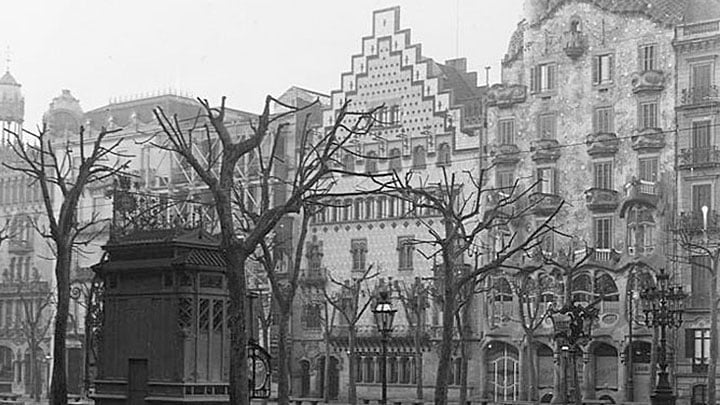 The construction of the façade was completed in 1877 by Emilio Sala Cortés, a fellow architect of Gaudí, at a time when electric lighting was yet to be introduced in Barcelona. The textile industry was bought in 1903 by the well-known industrialist from Barcelona Josep Batlló y Casanovas.
Casa Batlló’s Construction
Apart from assigning to Antoni Gaudí the duty of a project in which the first demolition of the construction was carried out, Mr. Josep Batlló allowed Gaudí complete artistic freedom. However, thanks to the bravery of Gaudí, the house was reconstructed in 1904 to 1906 and the house was demolished.
The architect was able to redesign the outside of the building by reorganising the internal partitioning, expanding the lightwell and in making the inside into a genuine work of art. At the same time, even though it is of artistic interest, the construction is rather utilitarian and relatively more modern than it is antique. Some of the elements in the architectural styles of the late 20th century are also said to be reflected here.
 Besides Casa Batlló, other buildings that were in the running for the urban prizes offered by the Barcelona City Council were also being refurbished by other architects. The period was called The Bone of Contention because of this. All of these modernist houses, including Casa Batlló, now belong to a separate category defined by:All of these modernist houses, including Casa Batlló, now belong to a separate category defined by:
- Casa Amatller (by the architect Josep Puig i Cadafalch).
- Casa Lleó Morera (by Lluís Domènech i Montaner).
- Casa Mulleras (Enric Sagnier).
- Casa Josefina Bonet (Marcel-li Coquillat).
Casa Batlló’s Interior Full of Art
Inside, the building is as artistic as the outside and is known as Casa Batlló. Gaudí was able to work with the best craftsmen of his time, and he used a number of materials including woods, glass, tiles, stones, decorations and wrought iron. Whenever I wander around the building, I am stunned by the architectural elements of the residence that are clearly of the modernist style: All the doors leading to the different apartments are marked with modernist designations. Windows on each level are made in such a manner that the tiles of the lightwell look like waves in the water. The doorknobs and baners are ergonomically fashioned.
 All five senses – vision, hearing, touch and olfactory – are completely embodied in this real work of art, which, despite the fact that its base is in utility at any given time, will never fail to amaze you. From the foyer to the rooftop deck, the functional and the beautiful are perfectly balanced.
Indoor Garden at Casa Batlló
The Noble Floor of the building has a private dining room of the Batlló family located in the middle of the floor and it has a direct access to a small rear garden. This garden is a small piece of heaven in the midst of concrete jungle and this garden is meant for the afternoon nap.
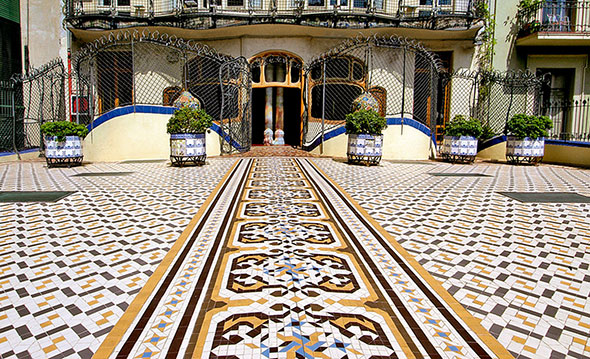 The most noticeable point of being very amazing is in the pavement and the tile and glass-coated flower pots that forms the major decoration of this area.
The Noble Floor
The Noble Floor is at the very center of the house; it has an extraordinary hall that is an example of the highest level of modernism and shows how the bourgeoisie of the time lived.
 The first room that opens from this floor is Mr Batlló’s study and a rather peculiar mushroom-shaped fireplace. This leads to the house’s main living room, which has a large picture window at its center; it is a gallery facing Paseo de Gracia, and is perfect for being seen and seeing. Among other details, the enormous oak doors are worth mentioning, as well as the organic shapes of which Gaudí made stained glass windows, and the ceiling, which is completely wavy, symbolizing the power of the sea.
Roof Terrace
The roof terrace is dominated by what is popularly known as the dragon’s back which characterises the façade and which has been represented by Gaudí with different coloured tiles.
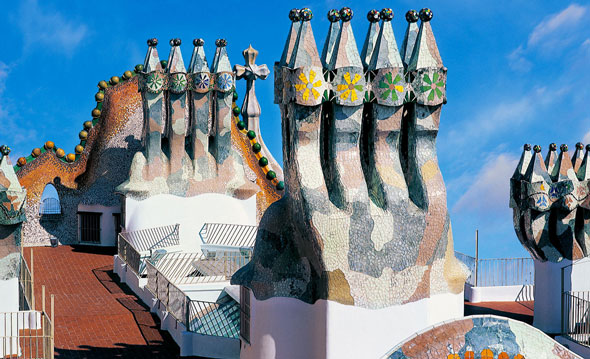 However, the main focal point of the roof terrace are the 4 crooked and polychrome chimney stacks which have been designed for non-admission of backdraughts. Again, beauty and usefulness are combined at the most beautiful and iconic house of the Catalan modernism.
The Loft
The loft is one of the most individualistic zones, and is an excellent example of the combination of the beautiful and the useful. It used to be for the tenants of the building and it contained laundry, storage and other facilities.
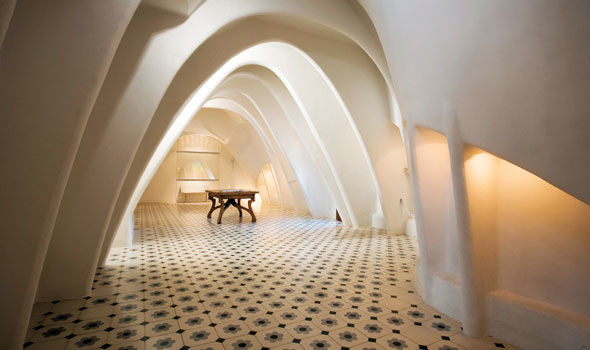 It is defined by the absence of complex forms, by the Mediterranean through the use of white color and by the light which pervades everything. It consists of 60 catenary arched structures which make the design of the space resemble the ribs of an animal.
Why Should You Go to Casa Batlló?
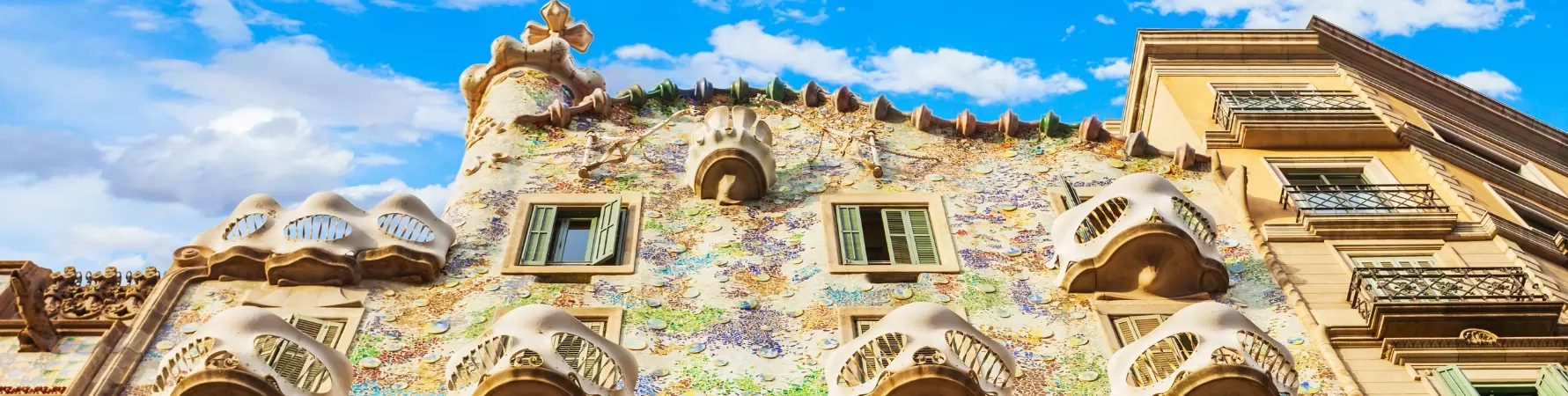
Casa Batlló is a modernist building situated in the centre of Barcelona which was designed by the famous architect Antoni Gaudí. It is a UNESCO World Heritage Site and is considered to be one of the most popular architectural landmarks of the city. People are attracted to Casa Batlló due to its quirkiness and the fact that it is built in a way that resembles natural shapes and colours. The façade is decorated with mosaic tiles, bone-like columns and undulating balconies that make the building look like it was built in a dream.
The interiors are just as breathtaking and the play of light and spaces as well as Gaudí’s creativity is seen throughout the house. The house also has multimedia guides and interactive features that make it possible for one to discover Gaudí’s brilliance. If you are an architecture lover or if you are just a tourist who wants to feel the magic of Barcelona, Casa Batlló is a perfect place to see what one of the greatest architects of the past can create.