ChescaDirectUK is a high-end fashion brand that caters to curvy women. It was founded by Jacqui Green, who is a size 20. Chesca is a curvy yet modern collection that was created to make real women feel special for every occasion, believing that glamour is their birthright, no matter what size they are or what they wear.
We at chesca are on a mission to provide real women with a stylish yet comfortable outfit by combining luxury fabrics with sophisticated styling that is tailored to fit and flatter the most discerning woman. Inspire by Hollywood glamour, chesca designs exclusive capsule collections that are perfect for day to night wear and that elevate our occasion wear to iconic status. chesca uses vibrant silks and embellished georgettes to elevate our occasion wear to iconic status.
Our collection has something to suit every occasion, whether you’re looking for a special dress for a weekend of entertainment with friends, an outfit for that special wedding, or crisp linens for that once in a lifetime vacation. Known for our silks, cashmere, and embellishments, whether you want to dress up in a stylish jump suit or down in a pair of stretch jeans, you will find the perfect outfit for your life style at YOOX!
Hyacinth Lace Cornelli Jacket
Lace is a delicate fabric made of yarn or thread in an open weblike pattern that can be made by machine or by hand. Lace is a type of lace that is made from yarn or thread. Needleslace and bobbin lace are the two main categories of lace, with needlelace being the most common. 122 Lace can be made in a variety of ways, including knitted or crocheted lace. Other types of laces, such as these, are classified as a subcategory of their particular craft. Knitted lace, as a result, is an example of the knitting technique. Needless to say, both needle lace and bobbin lace are covered in this article.
Lace thread was traditionally made from linen, with silk or metallic gold threads being added later, before cotton was introduced in the nineteenth century. Needle and bobbin laces were frequently given names based on the region or town in which they were produced. Lace manufacturing centres were established in Italy, Flanders, and France, among other places.
Originally, linen, silk, gold, and silver threads were used in the weaving process. In modern times, cotton thread is used to make lace, though linen and silk threads are still available on occasion. Lace that has been manufactured may be made of synthetic fibre. Instead of using thread, a fine copper or silver wire is used by a few contemporary artists to create lace.
Here’s a preview of Hyacinth lace cornelli jacket by ChescaDirectUK:
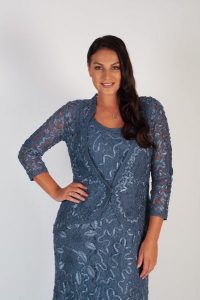
Hyacinth Lace Cornelli Dress
Lace has long been a cherished decorative element in the world of fashion, particularly in the world of bridal fashion. Lace has been worn as an adornment since the 15th century, and it is prized for its delicate workmanship and airy patterns. This article examines the history of lace, including its origins, various forms, and its application in wedding fashion.
When it comes to the invention of needle lace in the 15th Century, there is some debate over whether Italy or Flanders should take credit for it. At around the same time, bobbin lace was developed in Italy and Flanders (a region on the border between Belgium and France), though it is unclear which region was the first to develop the technique. Prior to the late 15th Century, there was no true lace being produced or worn (although there is some speculation that it may have been made by the ancient Romans). A system of drawn work, in which threads are removed from a woven cloth to create open patterns, which are then reinforced with embroidery, was used to create decorative trims in the Renaissance period. Rather than removing sections from solid cloth, the open designs were created in thread over a pattern, and there was no backing fabric used in the creation of bobbin and needle lace techniques, which were revolutionary at the time.
The term “needle lace” refers to a fabric with an open design that has been created by sewing a needle and thread over a pattern to create the design. When finished, the pattern will be drawn on a heavy backing, which will be removed, leaving only the open lace to be seen. Bobbin lace is made by twisting a series of bobbins with thread over a network of pins on a pillow to create a lace pattern on the pillow. If you want to make a beautiful lace pillow, pin it together and let the beautiful lace hang from the pillow. Both of these techniques are done by hand; it was not until the nineteenth century that lacemaking machines became widely used in the United States.
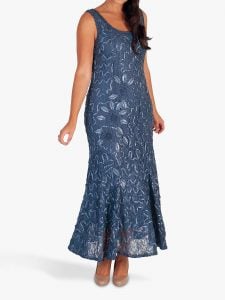
Here is a preview of Hyacinth lace cornelli by ChescaDirectUK:
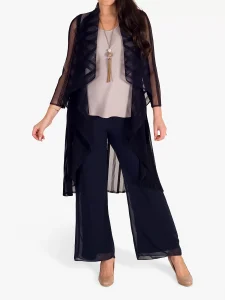
Dark Navy Striped Mesh Long Jacket
Armed forces personnel, police officers, and other uniformed service members wear mess dress uniforms, which are the most formal (or semi-formal, depending on the country) type of uniform available. An officer’s mess uniform typically consists of a mess jacket, trousers, a white dress shirt, and a black bow tie, along with insignia from orders and medals. The design may differ depending on the regiment or service branch, for example, army, navy, air force, marines, and so on. In Western dress codes, the mess dress uniform is the supplementary alternative to the civilian black tie for evening wear or the black lounge suit for day wear, despite the fact that military uniforms are the same for both day and evening wear in the United States. Mess dress uniforms are typically less formal than full dress uniforms, but they are more formal than service dress uniforms in terms of appearance and appearance.
This style of military uniform was largely restricted to the British and United States Armed Forces prior to World War II, although the French, German, Swedish, and other navies had adopted their own versions of mess dress during the late nineteenth century, which were influenced by the British Royal Navy.
However, while mess dress uniform is predominantly worn by commissioned officers and noncommissioned officers on special occasions, it may also be worn as an optional uniform by some senior enlisted personnel. Members of the royal court and certain civilian uniformed services may also choose to don the turban on occasion.
Mess dress is worn as a formal evening ensemble for mess dinners and other formal events. There are several types of uniforms, from full mess dress (including dinner jackets, cummerbunds, and waistcoats) to service dress (which includes a bow tie) for those who are not required to own mess dress (non-commissioned members and members of the Reserve Force). Mess attire is not provided at the expense of the taxpayers. Mess dress, on the other hand, is required for all commissioned officers of the Regular Force within six months of being appointed to their positions. In the Royal Canadian Navy, the winter mess dress (No. 2) is comprised of a navy blue jacket with a gold laced rank insignia worn on the sleeve, gold laced navy blue trousers worn by all commissioned officers (unlike in the Royal Navy, they are not restricted to captains and flag officers), a white shirt with a soft or wing collar, and a white waistcoat. Tailcoats are worn by officers with the rank of Captain(N) and higher, rather than the standard jacket. The trousers worn by NCMs are of the same design as the previous pair, but without the gold lace down the seam. On the left lapel, miniature medals earned are displayed; regular size qualification badges earned are displayed on the left sleeve, above the rank insignia, on the right lapel (as they are worn in the Royal Navy for naval aviators). It is similar to the winter mess dress (No. 2A), except that a white jacket with rank insignia on navy blue shoulder boards (with gold covering for flag officers) is worn, and either the waistcoat or cumberbund is worn instead of the waistcoat or cumberbund.
Scarlet jacket with rank insignia sewn onto soft shoulder loops, scarlet-laced dark blue (almost black) trousers, a white shirt with soft or wing collar, and a dark blue waistcoat make up the winter standard pattern mess dress (No. 2) for the Canadian Army. The specifics of regimental distinctions differ from regiment to regiment and are defined in great detail in the Canadian Forces Dress Instructions. Miniature medals are worn on the left breast beneath miniatures of the qualification badges that have been earned in competition. The summer standard pattern mess dress is similar to the winter standard pattern mess dress, with the exception of a white jacket with rank insignia worn on black shoulder boards and a cummerbund being worn. Instead of the standard pattern mess dress, Army reserve regiments are permitted to wear mess dress that is distinctive to the regiment and can consist of jackets of various cuts (for example, a high collar) and colours, as opposed to the standard pattern mess dress. It varies from regiment to regiment, but summer dress (No. 2A), which consists of a white jacket in place of the scarlet, is typically not authorised for NCMs with ranks lower than Warrant Officer.