How do plants help the Earth?
When it comes to creating and sustaining a pleasant and sanitary atmosphere in one’s home or place of business, the presence of plants is an absolute requirement. During the process of photosynthesis, these organisms produce oxygen as a byproduct while simultaneously absorbing carbon dioxide as a substrate. This process is called “oxygen fixation.” This process takes place within the people on their own within themselves. In order for the process of cellular respiration to be successful, it is necessary to have oxygen present. This is because oxygen is an essential component that is required for the process. This process must take place in all organisms in order for them to be considered aerobic life forms because that is one of the criteria for this classification. In addition to this, it ensures that the ozone layer will continue to exist, which acts as a shield against the potentially lethal effects that ultraviolet radiation can have on life on Earth. Specifically, it protects against the effects of solar flares. By reducing the amount of ultraviolet radiation that is released into the atmosphere, it will be possible to accomplish this goal.
You can discover more Plants at Secret Gardening Club.
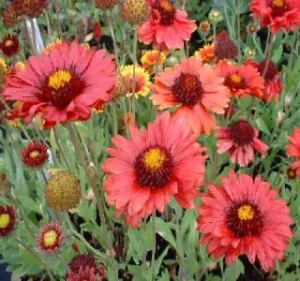
The ‘Burgunder’ blanketflower is a short-lived perennial that can reach a diameter of ten centimetres and grows in a bushy manner. It is also known by its German name, Burgunder. The plant has a life span that is disproportionately brief when weighed against the dimensions of its leaves in terms of length and width. The flower heads that are produced by this plant can have a maximum diameter of up to ten centimetres at their widest point and have a coloration that is comparable to that of a dark red. The plant in question has a relatively short existence when measured against the typical length of time lived by other species belonging to the same genus. When the flower is in full bloom from the beginning of summer all the way through fall, there is a hint of yellow at the very tips of the rays that radiate out from the centre of the flower. This can be seen from the beginning of summer until the end of fall. When the flower is in full bloom, one can observe this feature.
Find the product image below of Gaillardia burgunder by Secret Gardening Club:
Total price: Now £3.99 was £5.99
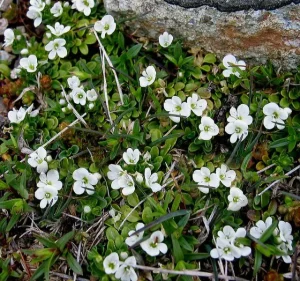
Flowering The plant species known as Veronica repens, also known as the Corsican speedwell or creeping speedwell, is native to both the island of Corsica in the Mediterranean Sea and the country of Morocco in Africa. Other names for this plant include the creeping speedwell and the Corsican speedwell. This plant is also known as the Corsican speedwell and the creeping speedwell. Other names for this plant include these. There are a few different names for this plant, including the Corsican speedwell and the creeping speedwell. These are some of the other names that are given to this plant: In some parts of the country, it is also referred to as the creeping speedwell. The cultivar known as “Sunshine,” which is recommended for use in these applications due to the fact that its tiny flowers are a deep purple rather than the more typical white, is recommended for use in rock gardens and as a ground cover. This recommendation is based on the fact that the cultivar’s tiny flowers are a deep purple rather than white. The utilisation of this cultivar yields very favourable results in both of these applications.
Find the product image below of Veronica repens by Secret Gardening Club:
Total price: Now £2.99 was £3.99
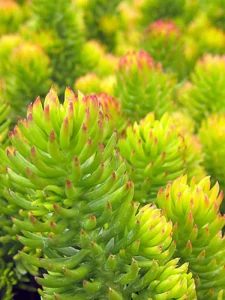
Stonecrop ‘Angelina’ is a low-growing perennial that has the potential to form a mat if allowed to spread out. It maintains the appearance of evergreen foliage throughout the year and can reach a maximum height of just one or two inches. When it is at its full size, it has the potential to reach a height of 15 centimetres and a width of 60 centimetres, and when it is at its full size, it has the potential to reach its full potential. The new leaves have a brilliant yellow colour when they first appear in the spring. However, by the time summer arrives, the leaves have matured into a yellow-green colour and have the shape of a linear and cylindrical cylinder. This occurs when the plant goes through the process of photosynthesis. The leaves go through a transformation in the fall, changing their colour to yellow, orange, and red tones as the season wears on. This phenomenon is known as “fall coloration.”
Find the product image below of Sedum rupestre angelina by Secret Gardening Club: