For what reasons are animals so significant?
Animals are significant for a number of reasons. They play an important role in the ecosystem by providing food and shelter for other animals. They also help to regulate the population of plants and animals by preying on weaker individuals.
Additionally, animals play a key role in the pollination of plants, which is essential for the production of fruits and vegetables. Animals are a major source of leisure and entertainment for humans. From pets to zoos, animals provide us with companionship, amusement, and education. In short, animals are essential to the health of the planet and the wellbeing of humankind.
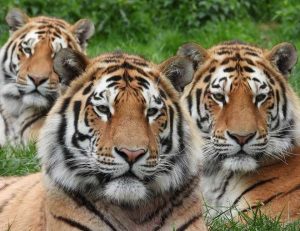
Amur tiger
The Amur tiger is a subspecies of tiger that is native to the Russian Far East. It is the largest of all the tigers, and its thick fur helps it to withstand the cold winters in its habitat. The Amur tiger is an apex predator, and its diet consists primarily of deer, Wild boar, and fish. However, the Amur tiger is endangered due to habitat loss and poaching.
In recent years, conservation efforts have helped to stabilize the population of Amur tigers, and there are now thought to be around 600 individuals living in the wild. With continued support, it is hoped that the Amur tiger will eventually be removed from the endangered species list.
Although we generally think of animals as living things that are not human, the definition of “animal” is actually quite broad. In biology, animals are classified as any member of the kingdom Animalia. This includes everything from sponges and jellyfish to insects and reptiles. Animals are distinguished from plants and other organisms by certain characteristics, such as the ability to move independently, sense their environment, and consume other organisms for food. Most animals also reproduce sexually, meaning that they produce offspring that combine the genetic material of both parents.
The study of animals is known as zoology, and scientists who study animals are called zoologists. Animals play an important role in our lives, both as companions and as creatures that help to keep our ecosystem in balance. We can learn a great deal about ourselves by studying the many different ways that animals behave and interact with their environments. To find the most suitable Animals just visit the zsl London Zoo website.