Nike DE, Inc. (/naki/ or /nak/)[note 1] is a multinational corporation headquartered in Oregon. “Nike” is an American multinational corporation that is engaged in the design, development, manufacturing, and marketing and sales of footwear and apparel products throughout the world. “Nike” is also an abbreviation for “Nike Air Force One” and “Nike Air Force Two.” Oregon’s Beaverton is home to the company’s headquarters, which is part of the greater Portland metropolitan area. Athletic shoes and apparel are its primary products, and it is also a major manufacturer of sports equipment, with revenue exceeding US$37.4 billion in its fiscal year 2020. (ending May 31, 2020). [4] As of 2020, it had 76,700 employees in various locations around the world. According to estimates, the brand alone will be worth more than $32 billion in 2020, making it the most valuable brand in the sports business. At the time of this writing, the Nike brand was valued at $29.6 billion in 2017. Nike was ranked 89th on the Fortune 500 list of the largest corporations in the United States based on total revenue in 2018.
Originally known as “Blue Ribbon Sports,” the company was founded on January 25, 1964, by Bill Bowerman and Phil Knight, and became officially known as Nike, Inc. on May 30, 1971. Nike, the Greek goddess of victory, is credited with giving the company its name. Nike sells its products under a variety of brands, including Nike Golf, Nike Pro, Nike+, Air Jordan, Nike Blazers, Air Force 1, Nike Dunk, Air Max, Foamposite, Nike Skateboarding, Nike CR7, and Jordan Brand, as well as through subsidiaries such as Converse and Jordan Brand. Nike previously owned Cole Haan, Umbro, and Hurley International, among other brands. From 1995 to 2008, Nike also owned Bauer Hockey. Apart from manufacturing sportswear and equipment, Niketown is a chain of retail stores that operate under the Niketown brand. Nike sponsors a large number of high-profile athletes and sports teams all over the world, and its trademarks “Just Do It” and the Swoosh logo are well-known all over the world.
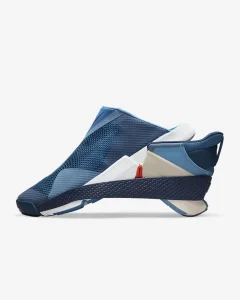
Nike Go FlyEase
This past February, the Nike Go FlyEase, the brand’s first truly hands-free shoe, made its debut in front of a global audience. When the shoes were first released in stores on April 30th, they sold out almost immediately, prompting criticism because so many of the pairs were sold to resellers rather than to people who would benefit from the design’s accessibility considerations.
Nike FlyEase allows you to participate in sports regardless of your ability thanks to technology developed with input from the disability community. Dress from head to toe in designs that have easily accessible features and are quick and simple to put on and take off so you can keep moving.
What has changed the most is that Nike has created a completely new version of the Pegasus 38, which is the most noticeable difference. They come in two styles: the traditional version (which has a regular upper and laces) and the new Flyease model. Flyease has all of the same features as the traditional model, but it has a no-tie lacing system instead of a traditional lacing system.
Here’s a preview of Nike go flyEase by Nike:
Nike Air Zoom Alphafly NEXT% Flyknit
The Alphafly is slightly heavier than the Vaporfly NEXT percent, but it provides significantly more cushioning and air than the Vaporfly. Nike Air is a classic. The single, curved carbon fibre plate and the full ZoomX foam midsole are both retained in this version of the shoe. However, it also includes two Zoom Air pods that are side-by-side under each foot.
The Vaporfly Next percent 2 is better suited for shorter races than the Alphafly Next percent because it is lighter and does not provide as much cushioning as the latter. Because of the amount of additional cushioning and bounce it provides, the Alphafly Next percent is better suited to longer races such as marathons and ultramarathons than shorter races.
Alphafly has a range of approximately 200 kilometres, according to a rule of thumb. Tempo Next percent, on the other hand, can last up to 500 kilometres thanks to the combination of ZoomX and React-foam technology.
Here is a preview of Nike air zoom alphafly by Nike:

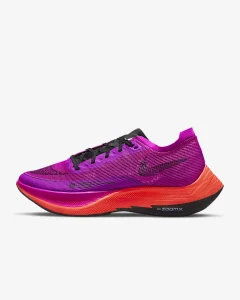
While the upper of this shoe has some minor flaws, including being too narrow and lacking some heel stability, overall, it is a highly successful model in the market. Throughout the stride, the Nike ZoomX Vaporfly Next percent 2 shoe maintains its lightweight, ultra-responsive, and propulsive characteristics.
His treadmill research revealed that when running at a constant wattage, the oxygen consumption differed depending on the shoe he was wearing. Hechmann discovered that he was 8 to 10 seconds faster per kilometre run with the Nike VaporFly (weight 200 grammes) than he was with other shoes, such as the New Balance More (weight 300 grams).
They are a type of running shoe manufactured by Nike that is believed to provide significant improvements in overall performance. Their thick foamy sole contains a curved carbon-fiber plate, which according to Nike research results in a 4% increase in metabolic efficiency over the standard shoe model.