Pressure metres known as manometers are used to measure the amount of air contained in each of the three components. Stethoscopes, which are intended to detect blood flow, can also be used to listen for blood noises in the brachial artery. The test requires the use of these three components. In order to successfully complete the test, you will need these three elements. If you want to do well on the test, you’ll need all three of these things. If you want to do well on the test, you’ll need these three things to help you out. There are three things you’ll need to do well on the test if you want to succeed. If you want to get the most out of the test, you’ll need all three of these things. If you want to complete the test successfully, you’ll need to have all of these components. To get an accurate reading of the patient’s blood pressure, three things are required: the patient, the cuff, and the blood pressure monitor (the major artery found in your upper arm).
What are the two types of blood pressure monitoring equipment?
The arm-cuff and wrist-cuff variants of blood pressure monitors are the two most common varieties that are designed to be used in the convenience and privacy of one’s own home by the individual who is being monitored. There is a wide variety of alternative approaches, including collecting measurements of the patient’s blood pressure through the finger, despite the fact that the precision of these other methods is not even close to being on par with that of the strategy that was mentioned before. One such way is to use a stethoscope to listen to the patient’s heart and lungs to get an accurate reading of their blood pressure. Both of these blood pressure monitors feature an automatic function, which means that the cuff will inflate on its own, and the metre will generate a reading once it has finished doing so and once it has finished the process of inflating the cuff. Both types of screens also have the capability of displaying digital information. When either of these two types is chosen, a reading specific to that type will be displayed on the screen.
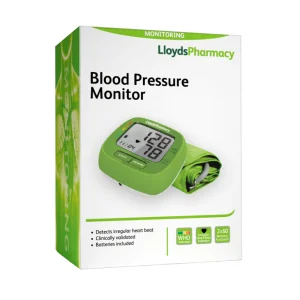
Total price: Now £12.00 was £35.00
Which is better upper arm or cuff blood pressure monitor?
There are several different types of blood pressure monitors that may be worn on the wrist. These monitors are able to generate reliable readings of the wearer’s blood pressure provided that the instructions that are included with the device are followed to the letter. These monitors are able to be discovered. However, the American Heart Association suggests that people who want to monitor their blood pressure at home use a device that detects blood pressure in the upper arm rather than a monitor that is worn on the wrist or finger. This is because upper arm blood pressure readings are more accurate than readings taken from the wrist or finger. This is due to the fact that readings collected from the upper arm provide more reliable results than readings taken from the wrist or finger. This is because readings obtained from higher up on the arm, such as the upper arm, produce more accurate findings than readings taken from lower down, such as the wrist or finger. If you want the most exact reading possible, they suggest using a blood pressure monitor that measures blood pressure in the upper arm rather than a monitor that is based on the wrist. This will allow you to get the most precise reading possible.
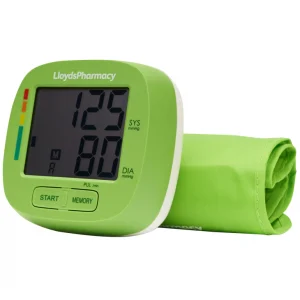
How do you use a blood pressure cuff monitor?
To begin, adjust the placement of the cuff so that it is one inch higher than the crease that your bent elbow has made. You can do this by moving the cuff up and to the right. Adjusting where the cuff sits on the arm is one way to accomplish this. Perform the action on your upper arm without any clothes on while you are doing it. Make sure that the cuff is drawn all the way to the end so that it may be snugly wrapped around your arm. This will ensure that it is stretched out evenly. Pulling on the end of the cuff will allow you to accomplish this goal. You should continue to tighten it until it is so snug that you are unable to fit more than two fingertips in the space that is created between the upper border of the cuff and your wrist after you have reached the desired level of tightness. This will allow you to determine whether or not it is sufficiently tight. The amount of cosiness that was able to be accomplished here is ideal. Check to see that the developing cuff is not leaving you with any skin irritations as you are going through the process of extending it.
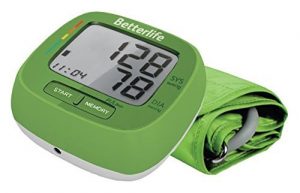
Blood pressure (BP) measurement without the use of a cuff is referred to as “cuffless blood pressure measurement,” which is an all-encompassing term for the practise of attempting to measure BP without the use of a cuff. The practise of attempting to measure blood pressure (BP) without the use of a cuff is referred to by this term. This phrase refers to a method of measuring a subject’s blood pressure that does not include the use of a cuff on the individual being measured (BP). It is referred to as “cuffless blood pressure measurement” or simply “cuffless measurement” when the practise of measuring blood pressure (BP) without the use of a cuff is used. This method is known as the “cuffless blood pressure measuring” method. cuffless blood pressure measurement method. As a result of recent developments in cuffless technology, it is now possible to estimate BP with a degree of precision that is regarded to be acceptable. This has made it possible for BP estimates to be more accurate. This wasn’t always the case in the not too distant past, though. Because of this, BP was able to produce estimations that were substantially more accurate than they had been previously. To find the most suitable Blood pressure just visit the Lloyds Pharmacy website.